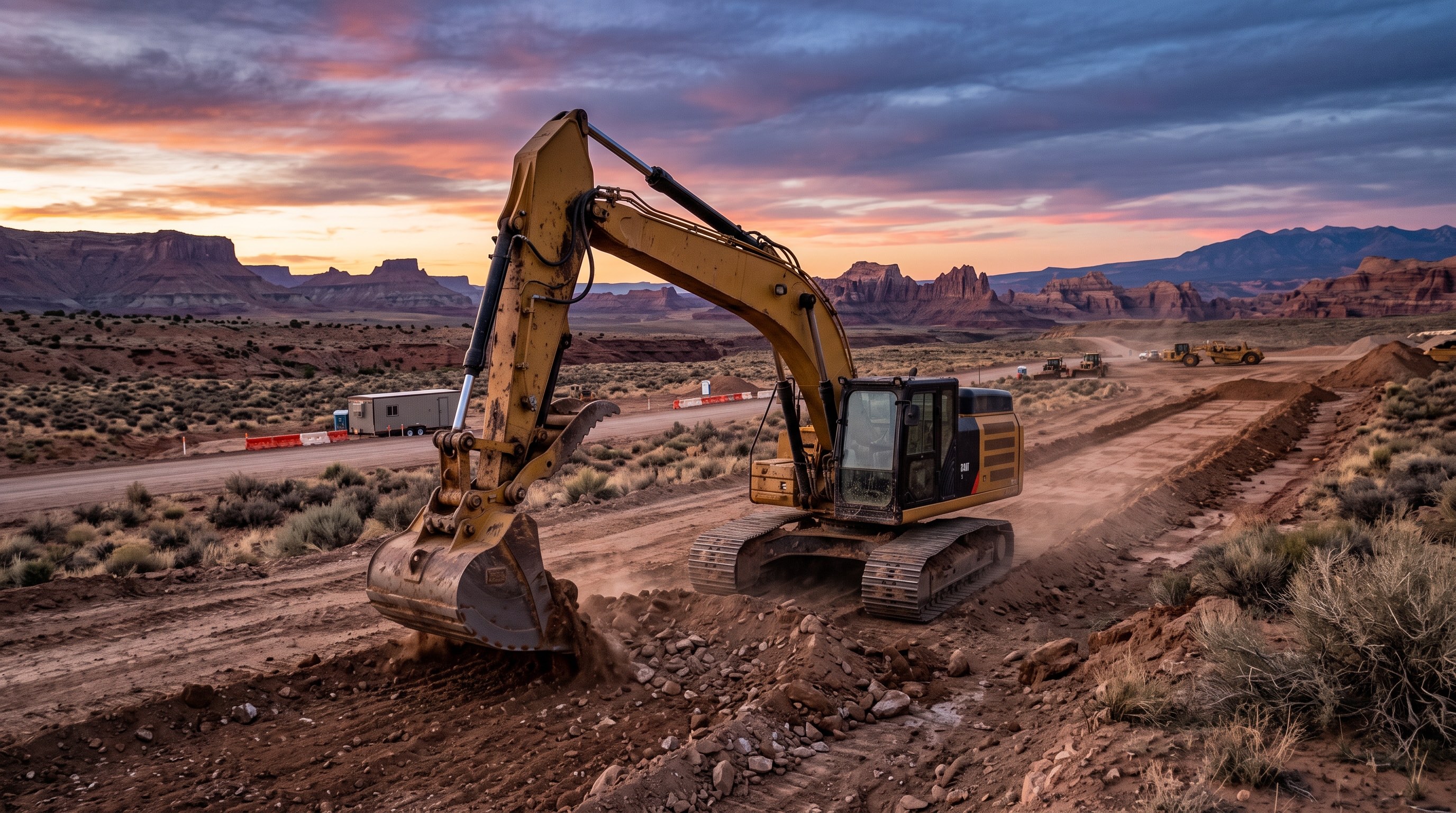
Demolition looks like the fun part — knock it down — but the difference between a good demo and a bad one is everything that happens around the knocking down: cutting the utilities first, protecting what stays, separating the debris, and hauling it off so you're left with clean, usable ground instead of a pile. This guide covers what a proper tear-out and haul-off involve in Tooele, what it costs, and how to vet a crew. Our on-site estimates are free.
Tear-out and haul-off: what actually matters
"Demolition" covers a range of jobs, and the approach changes with each:
- Structures. Old sheds, barns, garages, mobile homes, and small buildings are taken down — often with an excavator for anything substantial — and the debris is loaded out.
- Concrete and flatwork. Slabs, old driveways, sidewalks, and footings are broken out and hauled, and broken concrete is often recycled rather than landfilled.
- Selective and interior. Sometimes only part of a structure comes out, which means protecting what stays and cutting cleanly.
Three things separate a real demolition from a reckless one, whatever the job:
- Utilities off first. Power, gas, water, and sewer are disconnected and capped before anything comes down — the single most important safety step.
- Debris managed. Material is separated where it makes sense — concrete, metal, and clean fill can often be recycled, which can hold down disposal cost — and the rest is hauled to a proper facility.
- Site left clean. The pad is cleared, any hole from a foundation or slab is backfilled and rough-graded, and you're left with ground you can actually use.
Demolition and hauling around Tooele Valley
A lot of Tooele Valley demolition comes with the territory of rural and growing land. Older lots around Erda, Grantsville, and Rush Valley often carry a tired shed, a collapsing barn, a corral, or an old slab that has to come out before anything new goes in — and the wave of new building in Stansbury Park and Erda means a steady need to clear ground for the next house or shop. Making room is often the whole point of the job.
Out here, hauling is a real part of the cost. Debris and old dirt have to be trucked to a proper disposal site, and rural lots can sit a fair drive from where the material ends up, so distance and the number of loads matter. It cuts both ways: a job that needs clean fill brought in, or spoil taken away, is priced partly on that trucking. Demolition also usually means a permit and a required utility disconnect through Tooele County or your city — those approvals are ultimately the property owner's responsibility, and the licensed operators we connect you with will tell you what your tear-out needs before anything comes down.
What a proper demolition and haul-off includes
A clean tear-out follows a sequence, and the cut-rate quote tends to skip the disconnects or leave the mess:
- Permits and utility disconnects. The right approvals are in hand and power, gas, water, and sewer are capped before demolition starts.
- Blue Stakes locate. A free 811 call marks buried lines so nothing underground gets torn up during the work.
- Protect what stays. Fences, trees, driveways, and neighboring structures that aren't part of the job are protected.
- Take it down and sort. The structure or slab is demolished, and debris is separated so concrete, metal, and clean fill can be recycled where possible.
- Haul off. Debris and unwanted dirt are trucked to a proper facility — not left in a pile for you to deal with.
- Backfill and rough grade. Any hole is filled and the ground is left rough-graded and usable.
The last two steps are the ones cheap demolition skips — a low bid that leaves a debris pile and an open hole isn't really finished.
What does demolition and hauling cost in Tooele?
Demolition is quoted per job, because size, construction, disposal, and haul distance all move it — a small wood shed and a concrete-and-steel garage are very different tear-outs. National guides like HomeAdvisor's demolition cost data give a rough frame, with disposal and trucking driving the local number.
| Job | Typical range* |
|---|---|
| Shed / small outbuilding | $500 – $3,000 |
| Detached garage | $2,000 – $8,000+ |
| Concrete slab / driveway removal | $2 – $6 / sq ft |
| Debris haul-off | Per load / per ton |
| Dirt import or export | Per yard, hauled |
*Ballpark ranges for planning only. Disposal fees, haul distance, concrete or steel, and any hazardous materials run higher; a simple wood tear-out with a short haul runs lower. Only a written on-site quote for your structure and site applies.
Watch the bid that looks cheap because it leaves out disposal — hauling and dump fees are a real part of demolition, and a quote that skips them just moves the cost, and the debris pile, back onto you. For a real number, call (435) 660-5063 for an on-site provider estimate.
How to vet any demolition crew (including us)
Before you hire anyone to tear something out, ask:
- Do you handle the permit and confirm the utilities are disconnected before starting?
- Is haul-off and disposal included in the price, or billed separately?
- Do you recycle concrete, metal, and clean fill where you can?
- Will you backfill the hole and rough-grade the site when you're done?
- Are you insured for demolition specifically, not just general dirt work?
A crew that answers cleanly on disposal and insurance is one worth hiring. Anyone who waves off the utility disconnects or the haul-off is a crew to pass on.
Tooele demolition and hauling questions, answered
Do I need a permit to demolish a building?
Usually, yes — most structure demolition needs a permit and a confirmed utility disconnect through Tooele County or your city, though a small shed sometimes doesn't. The approvals are ultimately the property owner's responsibility, and the operator we connect you with will tell you what your tear-out needs before anything comes down.
Do you haul the debris away, or just knock it down?
Haul-off is the point — a proper job trucks the debris and any unwanted dirt to a proper disposal site and leaves you with clean ground, not a pile. Where it makes sense, concrete, metal, and clean fill are recycled, which can also hold down disposal cost. A quote that leaves out disposal simply moves that cost back to you.
Can you take out an old concrete slab or driveway?
Yes. Slabs, driveways, sidewalks, and footings are broken out and hauled off, and the broken concrete is often recycled rather than landfilled. Once it's out, the ground underneath can be rough-graded so it's ready for whatever comes next.
What has to happen before demolition starts?
The utilities — power, gas, water, and sewer — are disconnected and capped, the right permit is in hand, and a free Blue Stakes locate marks any buried lines. Those steps come first for safety, every time, and skipping them is the mark of a crew to avoid.
Will you clean up and level the site afterward?
Yes — a real tear-out ends with the debris hauled off, any hole from a slab or foundation backfilled, and the ground rough-graded so it's usable. Leaving a debris pile or an open hole isn't a finished job.
Which areas do you serve?
Tooele and the surrounding Tooele Valley — Grantsville, Stansbury Park, Erda, Lake Point, and Rush Valley. Clearing a site is often the first step before site prep and grading for a new build, and the crews we connect you with handle both ends.